Solutions · 05
Language models that understand your documents
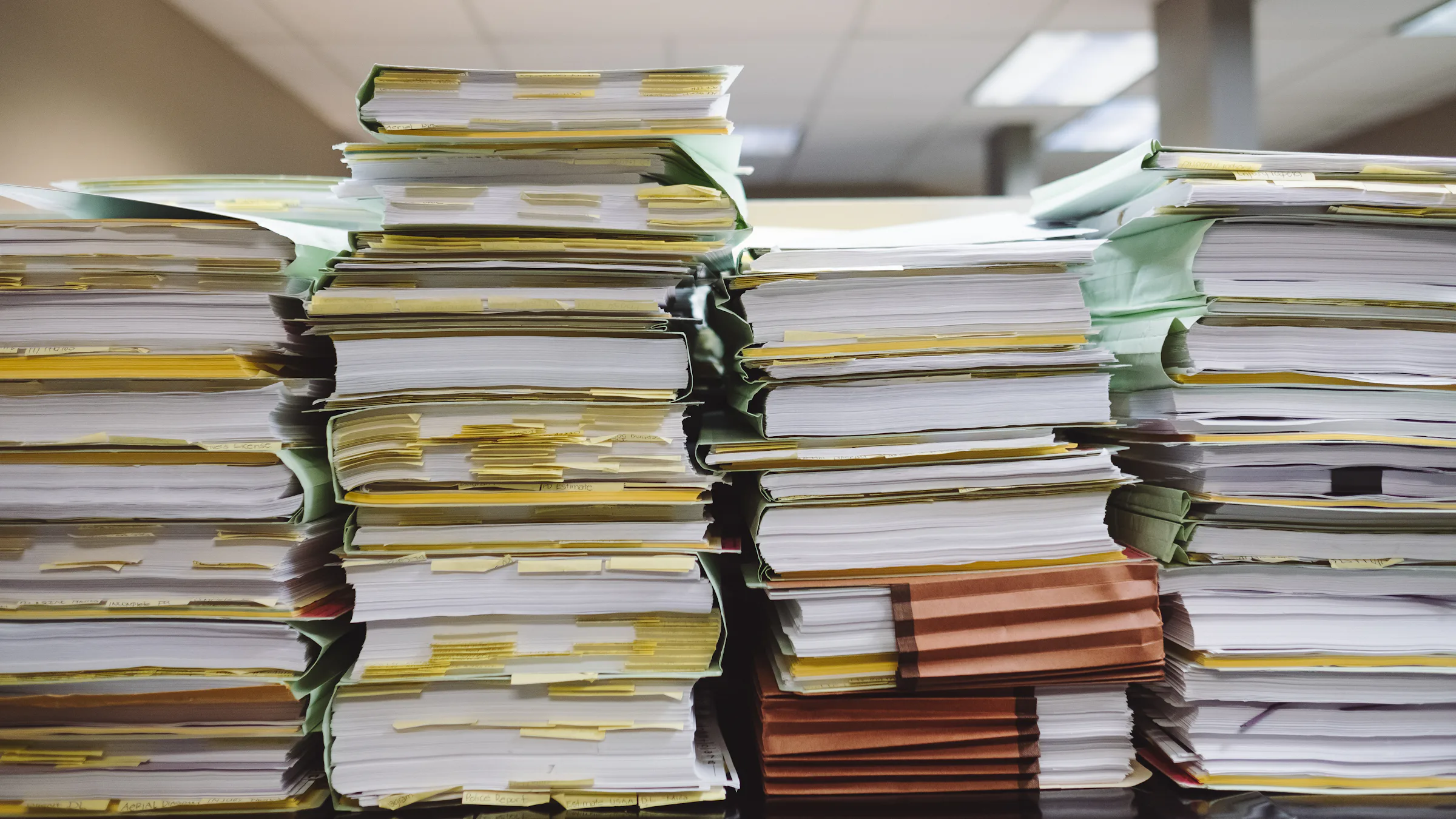
Contracts, tender documents, medical records, insurance policies and emails hold information that is still reviewed by hand. We build systems that read those documents, extract what matters and answer questions with citations, on your own data and with access controls, so your team finds the answer without reading hundreds of pages.
Challenges we solve
- 01
Lawyers and analysts reading hundreds of pages to find a handful of clauses.
- 02
Internal knowledge scattered across folders, emails and manuals that nobody checks.
- 03
Generic chatbots that make up facts and never say where an answer comes from.
NLP & Language Models
Enterprise RAG systems
Assistants that answer from your documents and cite the source of every statement.
AI document analysis
Extraction of clauses, dates, amounts and obligations from contracts, tender documents and forms.
Specialized and custom LLMs
Models tuned to the vocabulary and criteria of your industry and your organization.
Fine-tuning and prompt engineering
We tune models and design prompts against evaluation sets that measure answer quality.
Classification and routing
We classify emails, requests and documents by topic, urgency or owner.
Security and privacy
Per-user access controls, anonymization of sensitive data and deployment on the cloud of your choice.
A clear process, from idea to scale
- 01
Assemble the corpus
We identify the documents, their format and sensitivity, and the questions your team needs answered.
- 02
Build the evaluation set
We work with your experts to create reference questions and answers that measure quality.
- 03
Design and tune
We choose the model, retrieval strategy and prompts, and iterate on them against the evaluation set.
- 04
Integrate and monitor
We bring the solution into your team's tools and monitor its accuracy in real use.
- Assistant or query API over your documents
- Document ingestion and extraction pipeline
- Evaluation set with quality metrics
- Access and sensitive data handling policies
- Performance report and continuous improvement plan
Answers with sources
Every answer shows which document and section it comes from.
Less manual reading
Your team reviews what matters instead of reading the entire file.
Accessible knowledge
Expertise stored in documents becomes available across the organization.
We choose the tool for the problem, not the other way around. These are some we use in this practice.
- Python
- LangChain
- RAG
- OpenAI
- Anthropic
- Gemini
- PyTorch
- PostgreSQL
Results that speak for themselves
NLP & Language Models
Are my documents used to train third-party models?
No. We configure model services with enterprise options that exclude your data from training and, when the use case requires it, deploy in your own cloud.
What is the difference between RAG and fine-tuning?
RAG looks up your documents at answer time and cites the source, which makes it the right choice when information changes. Fine-tuning adjusts the model's behavior and suits repetitive tasks with a fixed style or format.
Does it work with scanned documents?
Yes. We include optical character recognition in the ingestion pipeline and validate extraction quality before the content reaches the model.
End-to-end capabilities to take AI into production
Ready to bring artificial intelligence into your operations?
Book a 30-minute conversation with our team. We review your case, prioritize opportunities and propose a concrete first step.